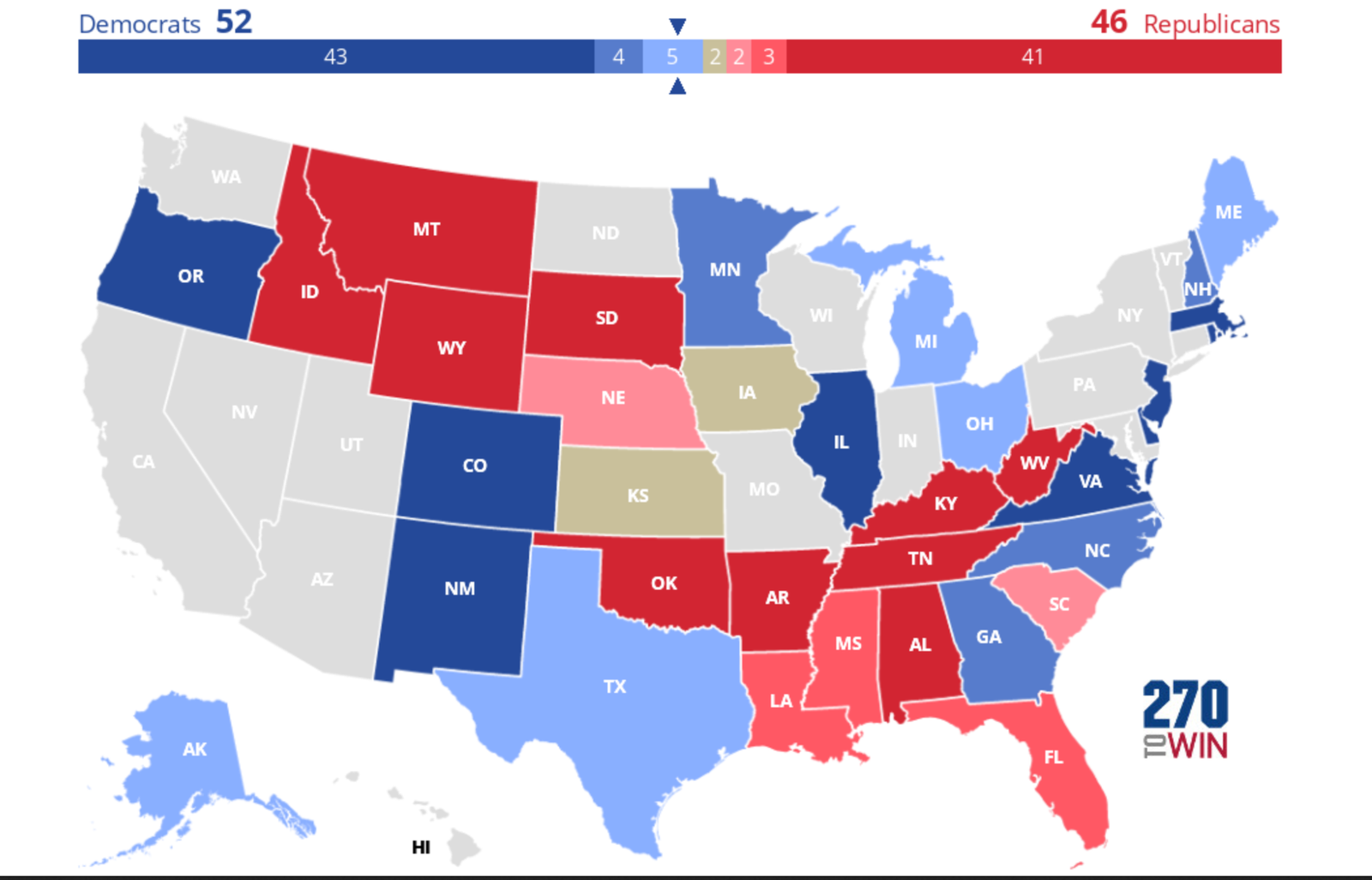
The 2026 midterms mark a significant turning point in American politics, largely due to the extremely close races in several swing states. Maine, Texas, and Ohio are each holding pivotal Senate elections. The Democratic Party is investing millions to gain control of the Senate, while Republicans are working to maintain their hold on Congress. Across the board, candidates are focusing on three major issues: affordable prescription drugs, affordable housing, and healthcare costs. These are not surprising priorities, as they affect all Americans regardless of demographics. This analysis will focus exclusively on these three issues.
Maine’s Senate race is currently a toss-up. Polls show Republican Susan Collins and Democrat Troy Jackson are virtually tied, with both candidates polling at 49%, including in Fox News surveys. Maine is a predominantly rural state that depends on social programs like Medicare. Incumbent Susan Collins has addressed nine broad issues: Defense & National Security, Education, Energy & Environment, Health Care, Homeland Security, Jobs & Economy, Senior Issues, Transportation, and Veterans. However, her statements on healthcare are vague, mostly highlighting her past work for rural communities. In contrast, Troy Jackson advocates for Medicare for All, lowering prescription drug costs, and increasing taxes on billionaires and large corporations. Collins has introduced more than 1,000 bills during her career, but only 26 have become law. Notably, she helped pass the Patient Right to Know Drug Prices Act and the Deceptive Mail Prevention and Enforcement Act.
Troy Jackson states that, in the Senate, he would support and cosponsor the Medicare for All Act, take on Big Pharma and insurance companies, and save working people money. Susan Collins is taking a more moderate approach, which is expected of an incumbent. Leading up to Election Day, pollsters have identified Maine as a major swing state.
Being a historically red state, Texas has a frontrunner in James Talarico. Talarico has spent over $114 million in campaign funds, more than any other single candidate in any state. He has spent the majority of his campaign focusing on education problems in Texas. To increase his reach, Talarico has spent time on podcasts and other platforms to connect with younger audiences, who have historically been less active in elections. Plus, younger generations often resonate with Democrats, giving Talarico a boost. Furthermore, Talarico has placed a major emphasis on corruption and protecting democracy. However, having over $100 million in campaign funds is ironic, as Talarico and other candidates preach affordability to citizens who would be extremely lucky to have $10,000 in savings.
On the flip side, Republican candidate Ken Paxton, a Trump endorser, is facing a tight race against Talarico. Paxton focuses on Big Pharma, carrying on Trump’s legacy, and strong borders, holding true to strong right-wing principles. Paxton, a much older candidate than Talarico, at 63 compared to Talarico’s 37, has Texas divided. Texas, a historically red state known for being reliable for Republican candidates, now finds itself at the center of a highly competitive midterm race. Due to shifts in urban voting patterns, Latino voters who tend to lean Democratic, and growing frustration over unaffordability, it’s no surprise that a progressive option is being brought into consideration. With a race between two candidates, neither of whom is an incumbent, the election is shaping up to be a toss-up.
For Democrats to win control of the Senate, or for Republicans to maintain their majority, Ohio is a crucial state in the race for control. The two candidates running for election are incumbent Jon Husted (R) and Sherrod Brown (D). Sherrod Brown ranks third in campaign spending, dwarfing Jon Husted’s $15 million. When it comes to states like Ohio or Texas, particularly those that have historically voted Republican, incumbent candidates will tend to spend less. Like every other candidate, healthcare and affordability are major campaign issues, with prescription drug prices being a particular target. This is something Brown emphasizes on SherrodBrownForOhio.com. However, Sherrod Brown also focuses on lobbying, congressional trading, and data centers. This is likely due to Ohio being a prime target for data centers compared to Maine, which is a less favorable location.
Jon Husted, the incumbent, has been endorsed by current President Donald Trump. Husted has also been endorsed by many right-wing organizations, such as the National Rifle Association. His website does not explicitly outline the issues he is focusing on for reelection, instead choosing to target retrospective voters. Husted has stated that he “Helped bring in the largest economic development deal in state history with Intel’s chip manufacturing facility in Licking County.” This stands in direct contrast to Brown, who wants to remove data facilities. Husted makes his core conservative principles clear.
The midterms will decide the majority in the Senate and influence how the rest of Donald Trump’s presidency will play out. Many of the swing states have large campaign funds, especially for underdogs and non-incumbents. We can expect to see tight election results in the aforementioned states. Make sure to head to the polls and vote!
Leave a Reply